Bridge the Gap
Between Sessions
with Continuous Monitoring
Behavidence delivers objective, real-time insights into your patients' mental health trajectory, continuously captured between visits, requiring nothing more from them than their phone.
Specifically designed for clinics providing Esketamine, TMS, and SSRI treatment.
You See Patients Every 6 to 8 Weeks.
They Change Every Day.
Psychiatric symptoms evolve rapidly. A patient stabilized on Esketamine, TMS, or SSRIs can shift trajectory, for better or worse, in the space between appointments. Without continuous observation, critical windows slip by unnoticed.
of first-line treatments result in minimal response
of patients experience relapse within one year post-treatment
of relapsed patients disengage before re-engagement attempts succeed
The Outcome Cost
Every missed relapse is both a clinical failure and a lost opportunity to adjust protocols, explore alternatives, or prevent further decline.
Tailored for Your Protocol
Whether you're running an Esketamine clinic, TMS center, or managing SSRI patients, Behavidence gives you the continuous visibility you need.
Esketamine's fast onset is its strength and its vulnerability. Response can deteriorate days after successful induction, but your next infusion assessment is weeks away.
- Detect emergence of non-response or early relapse within 48 hours of onset
- 24/7 behavioral tracking to identify slip patterns between infusions
- Real-time clinician alerts when mood trajectories shift unexpectedly
- Objective tracking of functional recovery and dissociation markers
of TRD patients who respond to Esketamine relapse within 6 months without maintenance (PMC10267177)
Reduction in relapse risk when Esketamine is continued alongside an antidepressant (JAMA Psychiatry)
of patients do not achieve stable remission during the induction phase alone (Spravato HCP data)
Zero Burden. Full Visibility.
Patient Downloads the App
Your patient installs the Behavidence app. No wearables, no daily questionnaires. It runs passively in the background.
Passive Data Collection
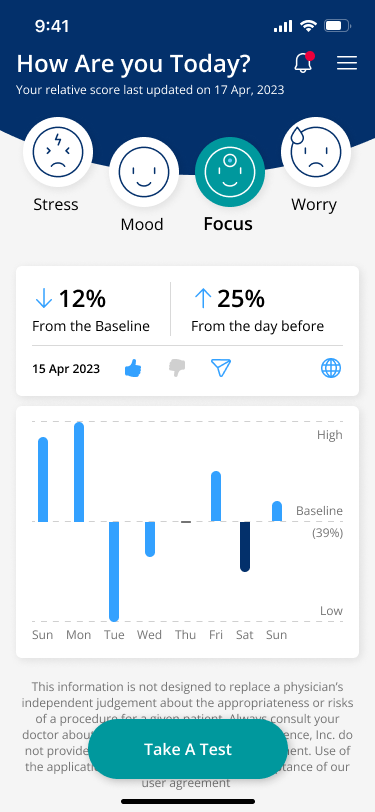
Our validated algorithms capture behavioral biomarkers: sleep, activity, digital behavior patterns, and more. 24/7.
AI Analysis
Our AI computes a continuous Mental Health Similarity Score, benchmarked against clinically validated profiles of depression and anxiety.
Clinician Dashboard
You see real-time trends, alerts, and objective reports in the Behavidence Care platform — without waiting for the next appointment.
Everything You Need, In One Place
Behavidence Care is your clinical command center: patient dashboards, validated questionnaires, and automated RTM billing reports, all in one workflow.
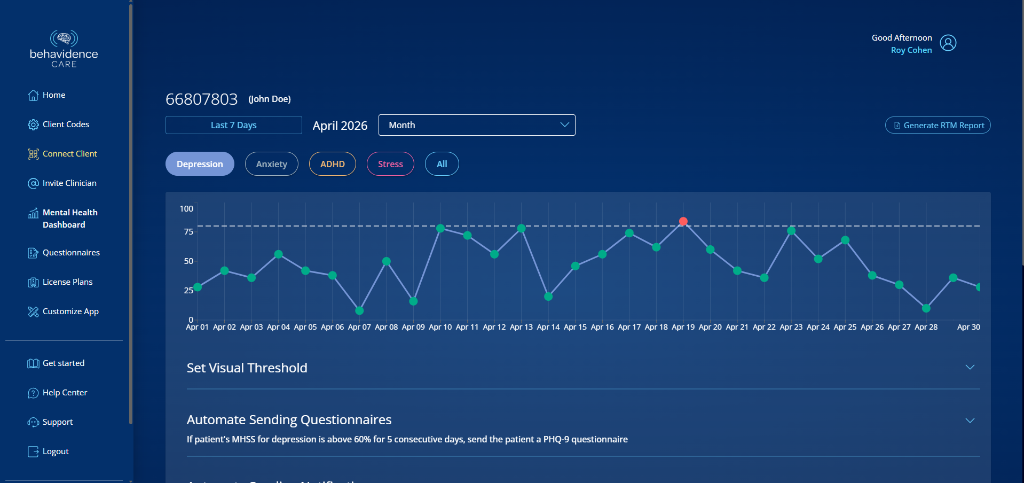
Daily Mood Trajectories, Automatically
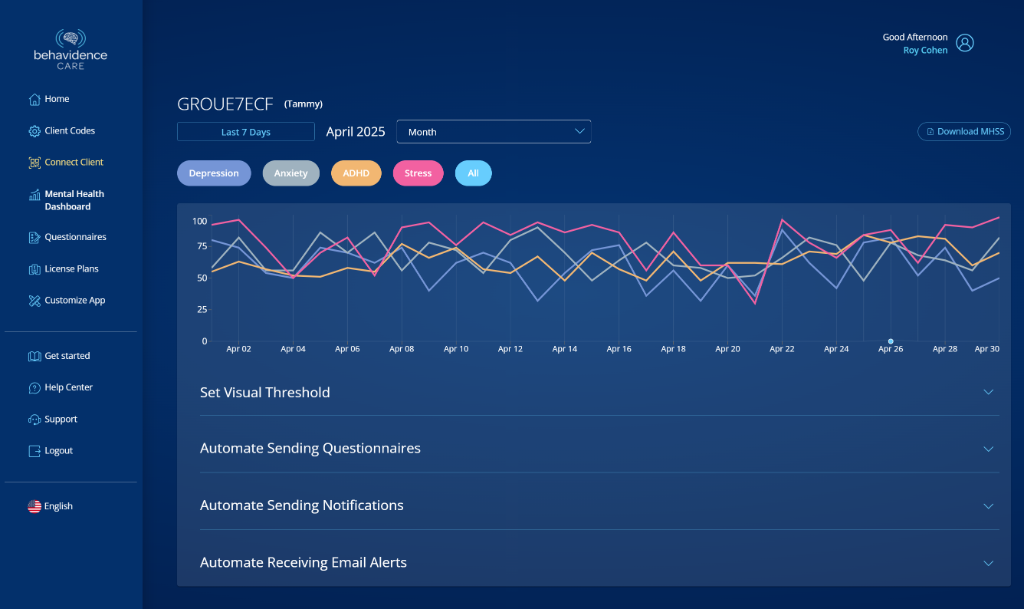
Track each patient's MHSS score daily across Depression, Anxiety, ADHD, and Stress, with threshold alerts and automated questionnaire triggers built in.
- Month-over-month behavioral trend visualization
- Set custom alert thresholds per patient
- Auto-trigger PHQ-9 when MHSS exceeds threshold
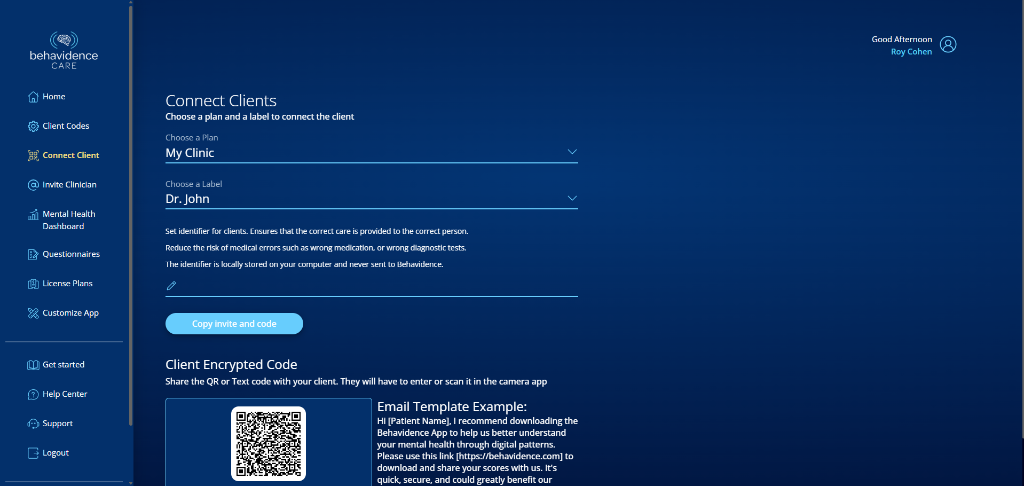
Onboard Patients in Under 60 Seconds
Generate an encrypted invite code and share it directly with your patient via email or QR code. Patients are connected to your clinic in minutes, no technical setup needed.
- Encrypted patient codes for HIPAA compliance
- Label patients by clinician or care team
- Ready-to-send email template included
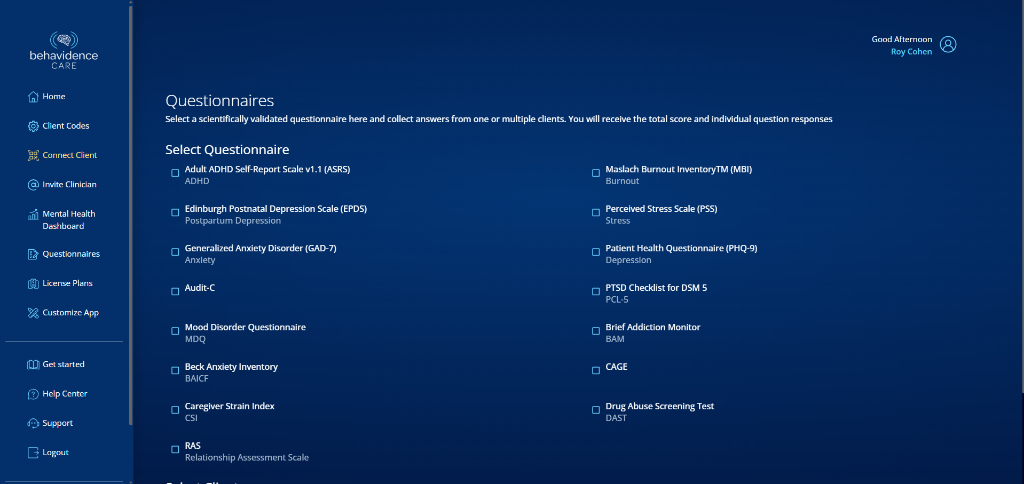
Distribute Standardized Assessments Instantly
Send PHQ-9, GAD-7, MDQ, PCL-5, BAM, and more to individual patients or entire cohorts, with automated scoring and billable results.
- 15+ validated instruments available out of the box
- Automatic scoring with severity classification
- Billable under CPT 96127 (behavioral assessment)
Clinically Validated.
Not Just Another App.
Our Mental Health Similarity Score (MHSS) is built on peer-reviewed research and validated against clinically diagnosed populations — not self-selected wellness users.
Reimbursable Through Existing CPT Codes
Behavidence's passive monitoring platform is billable under Remote Therapeutic Monitoring (RTM) codes, no new billing infrastructure required.
Initial patient education and onboarding to the remote therapeutic monitoring platform.
First 20 minutes of clinician time spent reviewing RTM behavioral health data monthly.
Each additional 20-minute increment of RTM treatment management services.
Group health behavior assessment and intervention per 30 minutes for mental health monitoring.
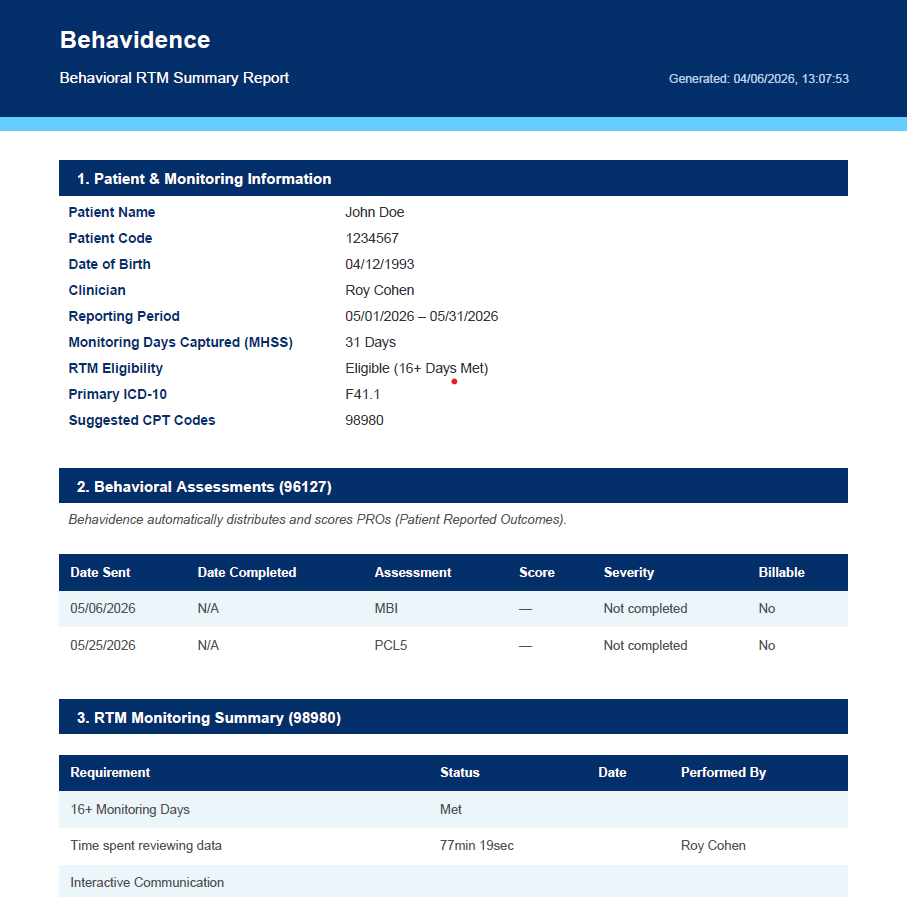
Note: RTM codes (98975, 98980, 98981) require a minimum of 16 days of monitoring data per 30-day billing period. Behavidence's passive, continuous data collection satisfies this threshold automatically, with no patient action required.
One Click to a Billable RTM Report
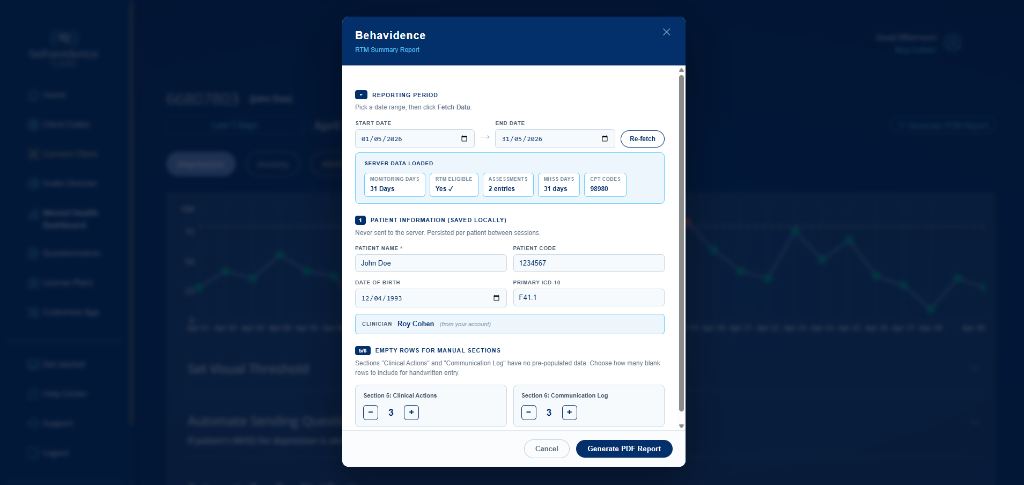
Behavidence automatically tracks monitoring days, clinician review time, and suggested CPT codes, then generates a ready-to-submit PDF report in seconds.